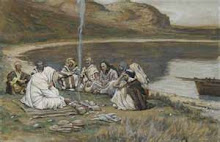
Jesus Christ is the only Way and Truth and Life - No one comes to the Father except by Him.

For as it was not possible that the man who had once for all been conquered, and who had been destroyed through disobedience, could reform himself, and obtain the prize of victory; and as it was also impossible that he could attain to salvation who had fallen under the power of sin,-the Son effected both these things, being the Word of God, descending from the Father, becoming incarnate, stooping low, even to death, and consummating the arranged plan of our salvation, upon whom [Paul], exhorting us unhesitatingly to believe, again says, "Who shall ascend into heaven? that is, to bring down Christ; or who shall descend into the deep? that is, to liberate Christ again from the dead." Then he continues, "If thou shall confess with thy mouth the Lord Jesus, and shalt believe in thine heart that God hath raised Him from the dead, thou shall be saved." And he renders the reason why the Son of God did these things, saying, "For to this end Christ both lived, and died, and revived, that He might rule over the living and the dead." And again, writing to the Corinthians, he declares, "But we preach Christ Jesus crucified; "and adds, "The cup of blessing which we bless, is it not the communion of the blood of Christ? " - St. Irenaeus, Against Heresies, Book III, Chapter XVIII, Section 2.

See: Traditional Catholic Prayers: Traditional Catholic Prayers: January 1 is the Feast of the Circumcision - January 6 Epiphany

Other Blogs List

Tuesday, November 29, 2011

The Athanasian Creed

Whoever wills his salvation before all else let him profess the Catholic faith.
For unless a person keeps this faith whole and entire, he will undoubtedly be lost forever.
Now the Catholic faith is this: that we worship one God in the Trinity and the Trinity in unity.
Neither confounding the Persons, nor dividing the Substance.
For there is one person of the Father, another of the Son, another of the Holy Spirit.
But the Father and the Son and the Holy Spirit have one divinity, equal glory, and coeternal majesty.
What the Father is, the Son is, and the Holy Spirit is.
The Father is uncreated, the Son is uncreated, and the Holy Spirit is uncreated.
The Father is infinite, the Son is infinite, and the Holy Spirit is infinite.
The Father is eternal, the Son is eternal, and the Holy Spirit is eternal.
Nevertheless, there are not three eternal beings, but one eternal being.
So there are not three uncreated beings, nor three infinite beings, but one uncreated being and one infinite being.
Likewise, the Father is omnipotent, the Son is omnipotent, the Holy Spirit is omnipotent.
Yet there are not three omnipotent beings, but one omnipotent being.

Thus the Father is God, the Son is God, and the Holy Spirit is God.
However, there are not three gods, but one God.
The Father is Lord, the Son is Lord, and the Holy Spirit is Lord.
However, there as not three lords, but one Lord.
For as we are obliged by Christian truth to acknowledge every Person singly to be God and Lord, so too are we forbidden by the Catholic religion to say that there are three Gods or Lords.
The Father was not made, nor created, nor generated by anyone.
The Son is not made, nor created, but engendered by the Father alone.
The Holy Spirit is not made, nor created, nor generated, but proceeds from the Father and the Son.

There is, then, one Father, not three Fathers; one Son, not three sons; one Holy Spirit, not three holy spirits.
In this Trinity, there is nothing before or after, nothing greater or less. The entire three Persons are coeternal and coequal with one another.
So that in all things, as is has been said above, the Unity is to be worshipped in Trinity and the Trinity in Unity.
He, therefore, who wishes to be saved, must believe thus about the Trinity.

It is also necessary for eternal salvation that he believes steadfastly in the incarnation of our Lord Jesus Christ.
Thus the right faith is that we believe and confess that our Lord Jesus Christ, the Son of God, is both God and man.

As God, He was engendered of the substance of the Father before time; as man, He was born in time of the flesh of His Mother.
He is perfect God; and He is perfect man, with a rational soul and human flesh.
He is equal to the Father in His divinity, but inferior to the Father in His flesh.
Although He is God and man, He is not two, but one Christ.
And He is one, not because His divinity was changed into flesh, but because His humanity was assumed unto God.
He is one, not by a mingling of substances, but by unity of person.
As a rational soul and flesh are one man: so God and man are one Christ.
He died for our salvation, descended to the waiting souls of the faithful departed, and rose from the dead on the third day.
He ascended into heaven, sits at the right hand of God the Father almighty. From there He shall come to judge the living and the dead.
At His coming, all men are to arise with their own bodies; and they are to give an account of their own deeds.
Those who have done good deeds will go into eternal life; those who have done evil will go into the everlasting fire.
This is the Catholic faith. Everyone must believe it, firmly and steadfastly; otherwise He cannot be saved.
Glory be to Thee, O equal Trinity, one God, before all ages, now and forever.
Amen.

Monday, November 28, 2011

Traditional Catholic Prayers: Jesus Christ the Son of God, who established His Eucharist

Traditional Catholic Prayers: Jesus Christ the Son of God, who established His Eucharist


This is the only Eucharist we must have part of.


At the Last Supper, Our Lord Jesus Christ instituted the Eucharist. This is for Baptized Christians only. One can believe in God with a salvific faith before Baptism or even without Baptism. St. Augustine makes an example of someone alone in a desert with no water to baptize with and no one to baptize the singular person there. If that person were to come to faith in the true Triune God, then that is a saving faith, even if he should die of thirst moments later. Is that salvation somehow retracted if he should live instead? Of course not. The water Baptism is an outward sign of an inward grace that is established by the person's confession of faith in God and the Holy Spirit's response to that confession. The Holy Spirit actually prompts, but does not force the person's confession in the first place.


The Last Supper is the New Testament fulfillment of the Old Testament type of the Paschal Lamb of the Passover that God commanded the Israelites to eat at the beginning of the Exodus from Egypt. The last supper is where Christ instituted His real presence (recreated unbloody by the Holy Spirit in the epiclesis in our communions) as it would be offered the next day on His Most Holy Cross as the only Sacrifice for the forgiveness of sins. This sacrifice was prefigured in the son, Isaac, that Abraham was willing to offer to God, but God substituted the Ram (prefiguring Christ) instead. Eid al-Kabir, "the Greater Eid," is the reverent Muslim holiday recalling the faith of Abraham in that sacrifice.


THE LORD'S EUCHARIST - CLICK ON PICTURE TO GO TO HOW TO CELEBRATE THE EUCHARIST


The Lord's Eucharist - Click on picture to go to how to celebrate the Eucharist
St. John 21:14 This is now the third time that Jesus was manifested to his disciples, after he was risen from the dead.


The Great tribulation is ever increasing in its proximity to us, though the exact time is known by God alone. The Church Fathers said that the faithful at that time would withdraw to private places to preserve the Eucharist in its purity. Below is the original house Church.


In the ancient Church there was no term such as "confect" the Eucharist. The Eucharist is present in the bread and in the wine and water (wine and water mixed approximately half and half) by the power of the Holy Spirit.


From the second chapter of the Acts of the Apostles below:


Acts:2:
41 They therefore that received his word were
baptized: and there were added in that day about three thousand souls.
42 ¶ And they were persevering in the
doctrine of the apostles and in the communication of the breaking of bread and in prayers.

Notice what is the practice of the faith in Christ as per the preaching of the Gospel by St. Peter himself and the Apostles on the day of Pentecost, which is when Christ told them to wait for and then preach the Gospel, when they would be guided to do so by the Holy Spirit.


Acts

4 And eating together with them, he (Jesus) commanded them, that they should not depart from Jerusalem, but should wait for the promise of the Father, which you have heard (saith he) by my mouth.
5 For John indeed baptized with water: but you shall be baptized with the Holy Spirit, not many days hence.


Christians, read Catholics, are to be baptized


Mt:28:19:
19 Going therefore, teach ye all nations: baptizing them in the name of the Father and of the Son and of the Holy Spirit.


(that is done with the above formula that Our Lord gave us and with water at that time, once in your life, with the proper intent, so that the Holy Spirit bestows actual baptism of the blood of Christ upon you)


Christians, read Catholics, are to persevere in the doctrine of the apostles

Christians, read Catholics, are to persevere in the communication of the breaking of bread (holy communion of the Eucharist)

Christians, read Catholics, are to be in prayers

Notice it is done house to house - in house churches:


Acts:2:

44 And all they that believed were together and had all things in common.
45 Their possessions and goods they sold and divided them to all, according as every one had need.
46 And continuing daily with one accord in the temple and breaking bread from house to house, they took their meat with gladness and simplicity of heart:


When you use the Didache, written by the Apostles in 49 A.D. at the council of Jerusalem, for the Eucharist, it would be proper to use the words of Institution and the Epiclesis (calling down of the Holy Spirit to bless gifts and make them into the Body and Blood of the Lord Jesus Christ) which were written by St. James the lesser of Jerusalem in his liturgy, he is the same person as the author of the Epistle of St. James (Jms:1:1: James, the servant of God and of our Lord Jesus Christ,...). See the attached file, "Original Eucharist", for complete Eucharist celebration for house Church.

Acts:2:
1 ¶ And when the days of the Pentecost were accomplished, they were all together in one place:
2 And suddenly there came a sound from heaven, as of a mighty wind coming: and it filled the whole house where they were sitting.
3 And there appeared to them parted tongues, as it were of fire: and it sat upon every one of them.
4 And they were all filled with the Holy Spirit: and they began to speak with divers tongues, according as the Holy Spirit gave them to speak.
5 ¶ Now there were dwelling at Jerusalem, Jews, devout men, out of every nation under heaven.
6 And when this was noised abroad, the multitude came together, and were confounded in mind, because that every man heard them speak in his own tongue.
7 And they were all amazed, and wondered, saying: Behold, are not all these that speak Galilean?
8 And how have we heard, every man our own tongue wherein we were born?
9 Parthians and Medes and Elamites and inhabitants of Mesopotamia, Judea, and Cappadocia, Pontus and Asia,
10 Phrygia and Pamphylia, Egypt and the parts of Libya about Cyrene, and strangers of Rome,
11 Jews also, and proselytes, Cretes, and Arabians: we have heard them speak in our own tongues the wonderful works of God.
12 And they were all astonished, and wondered, saying one to another: What meaneth this?
13 But others mocking, said: These men are full of new wine.
14 ¶ But Peter standing up with the eleven, lifted up his voice, and spoke to them: Ye men of Judea, and all you that dwell in Jerusalem, be this known to you and with your ears receive my words.
15 For these are not drunk, as you suppose, seeing it is but the third hour of the day:
16 But this is that which was spoken of by the prophet Joel:
17 And it shall come to pass, in the last days, (saith the Lord), I will pour out of my Spirit upon all flesh: and your sons and your daughters shall prophesy: and your young men shall see visions, and your old men shall dream dreams.
18 And upon my servants indeed and upon my handmaids will I pour out in those days of my spirit: and they shall prophesy.
19 And I will shew wonders in the heaven above, and signs on the earth beneath: blood and fire, and vapour of smoke.
20 The sun shall be turned into darkness and the moon into blood, before the great and manifest day of the Lord to come.
21 And it shalt come to pass, that whosoever shall call upon the name of the Lord shall be saved.
22 Ye men of Israel, hear these words: Jesus of Nazareth, a man approved of God among you by miracles and wonders and signs, which God did by him, in the midst of you, as you also know:
23 This same being delivered up, by the determinate counsel and foreknowledge of God, you by the hands of wicked men have crucified and slain.
24 Whom God hath raised up, having loosed the sorrows of death, as it was impossible that he should be holden by it.
25 For David saith concerning him: I foresaw the Lord before my face: because he is at my right hand, that I may not be moved.
26 For this my heart hath been glad, and my tongue hath rejoiced: moreover my flesh also shall rest in hope.
27 Because thou wilt not leave my soul in hades: nor suffer thy Holy One to see corruption.
28 Thou hast made known to me the ways of life: thou shalt make me full of joy with thy countenance.
29 Ye men, brethren, let me freely speak to you of the patriarch David: that he died and was buried; and his sepulchre is with us to this present say.
30 Whereas therefore he was a prophet and knew that God hath sworn to him with an oath, that of the fruit of his loins one should sit upon his throne.
31 Foreseeing this, he spoke of the resurrection of Christ. For neither was he left in hell: neither did his flesh see corruption.
32 This Jesus hath God raised again, whereof all we are witnesses.
33 Being exalted therefore by the right hand of God and having received of the Father the promise of the Holy Ghost, he hath poured forth this which you see and hear.
34 For David ascended not into heaven; but he himself said: The Lord said to my Lord: Sit thou on my right hand,
35 Until I make thy enemies thy footstool.
36 Therefore let all the house of Israel know most certainly that God hath made both Lord and Christ, this same Jesus, whom you have crucified.
37 ¶ Now when they had heard these things, they had compunction in their heart and said to Peter and to the rest of the apostles: What shall we do, men and brethren?
38 But Peter said to them: Do penance: and be baptized every one of you in the name of Jesus Christ, for the remission of your sins. And you shall receive the gift of the Holy Ghost.
39 For the promise is to you and to your children and to all that are far off, whomsoever the Lord our God shall call.
40 And with very many other words did he testify and exhort them, saying: Save yourselves from this perverse generation.
41 They therefore that received his word were baptized: and there were added in that day about three thousand souls.
42 ¶ And they were persevering in the doctrine of the apostles and in the communication of the breaking of bread and in prayers.
43 And fear came upon every soul. Many wonders also and signs were done by the apostles in Jerusalem: and there was great fervor in all.
44 And all they that believed were together and had all things common.
45 Their possessions and goods they sold and divided them to all, according as every one had need.
46 And continuing daily with one accord in the temple and breaking bread from house to house, they took their meat with gladness and simplicity of heart:
47 Praising God and having favour with all the people. And the Lord increased daily together such as should be saved.


Attached file Original Eucharist


Words in dark red are instructions and not to be said out loud. Words in light red and black are to be said out loud.


Mix the cup half and half with water and red wine, the hosts can be purchased from stores that sell Christian supplies. The people are those of the house Church there with the celebrant. The house Church selects the celebrant from among their own. The celebrant appoints the deacons in a house Church large enough to have them, otherwise their part is done by the people. If you are celebrating alone then you do the part of the celebrant and the people and the deacons.


+


In the Name of the Father and of the Son and of the Holy Spirit


Our Father Who art in heaven,

hallowed be Thy name,

Thy kingdom come,

Thy will be done

on earth as it is in heaven.

Give us this day our daily bread,

and forgive us our trespasses,

as we forgive those who trespass against us,

and lead us not into temptation,

but deliver us from evil.


(2) First, concerning the cup:


We give you thanks, our Father,

for the holy vine of David your servant, which you have made known to us through Jesus, your servant;

to you be the glory unto the endless ages of ages to come.


(3) And concerning the broken bread:


We give you thanks, our Father,

for the life and knowledge

which you have made known to us through Jesus; your servant;

to you be the glory unto the endless ages of ages to come.


Just as this broken bread was scattered

upon the mountains and then was

gathered together and became one,

so may your church be gathered together

from the ends of the earth into your kingdom;

for yours is the glory and the power unto the endless ages of ages to come.


The People: It is becoming and right.

Then the celebrant prays: Verily it is becoming and right, proper and due to praise Thee, to sing of Thee, to bless Thee, to worship Thee, to glorify Thee, to give Thee thanks, Maker of every creature visible and invisible, the treasure of eternal good things, the fountain of life and immortality, God and Lord of all:
Whom the heavens of heavens praise, and all the host of them; the sun, and the moon, and all the choir of the stars; earth, sea, and all that is in them; Jerusalem, the heavenly assembly, and church of the first-born that are written in heaven; spirits of just men and of prophets; souls of martyrs and of apostles; the six-winged seraphim, which cover their faces with two wings, their feet with two, and with two they fly, crying one to another with unresting lips and the many-eyed cherubim, dominions, archangels, especially St. Michael and St. Gabriel, authorities, powers and angels with unceasing praises: Holy, holy, holy, O Lord God Pantocrator

(Aloud.) With loud voice singing the victorious hymn of Thy majestic glory, crying aloud, praising, shouting, and saying:-

The People: Holy, holy, holy, O Lord of Sabaoth, the heaven and the earth are full of Thy glory. Hosanna in the highest; blessed is He that cometh in the name of the Lord. Hosanna in the highest.

The celebrant, making the sign of the cross on the gifts + , says: Holy art Thou, King of eternity, and Lord and giver of all holiness; holy also Thy only-begotten Son, our Lord Jesus Christ, by whom Thou hast made all things; holy also Thy Holy Spirit, which searches all things, even Thy deep things, O God: holy art Thou, almighty, all-powerful, good, dread, merciful, most compassionate to Thy creatures; who didst make man from earth after Thine own image and likeness; who didst give him the joy of paradise; and when he transgressed Thy commandment, and fell away, didst not disregard nor desert him, O Good One, but didst chasten him as at merciful father, call him by the law, instruct him by the prophets; and afterwards didst send forth Thine only-begotten Son Himself, our Lord Jesus Christ, into the world, that He by His coming might renew and restore Thy image;
Who, having descended from heaven, and become flesh of the Holy Spirit and Virgin Godmother Mary, and having sojourned among men, fulfilled the dispensation for the salvation of our race; and being about to endure His voluntary and life-giving death by the cross, He the sinless for us the sinners, in the night in which He was betrayed, nay, rather delivered Himself up for the life and salvation of the world,

Then the celebrant holds the bread in his hand, and says: Having taken the bread in His holy and pure and blameless and immortal hands, lifting up His eyes to heaven, and showing it to Thee, His God and Father, He gave thanks, and hallowed, and brake, and gave it to us, His disciples and apostles, saying:-

(here break the bread and set back down on the plate)

The Deacons say: For the remission of sins and life everlasting.

Then he says aloud: Take, eat: this is my body, broken for you, and given for remission of sins.

The People: Amen.

Then he takes the cup, and says: In like manner, after supper, He took the cup, and having mixed wine and water, lifting up His eyes to heaven, and presenting it to Thee, His God and Father, He gave thanks, and hallowed and blessed it, and filled it with the Holy Spirit, and gave it to us His disciples, saying, Drink ye all of it; this is my blood of the new testament shed for you and many, and distributed for the remission of sins.

The People: Amen.


(set cup back down)

The celebrant: This do in remembrance of me; for as often as ye eat this bread, and drink this cup, ye do show forth the Lord's death, and confess His resurrection, till He come.

The Deacons say: We believe and confess:

The People: We show forth Thy death, O Lord, and confess Thy resurrection.

The celebrant (Oblation): Remembering, therefore, His life-giving sufferings, His saving cross, His death and His burial, and resurrection from the dead on the third day, and His ascension into heaven, and sitting at the right hand of Thee, our God and Father, and His second glorious and awful appearing, when He shall come again with glory to judge the quick and the dead, and render to every one according to His works; even we, sinful men, offer unto Thee, O Lord, this dread and bloodless sacrifice, praying that Thou wilt not deal with us after our sins, nor reward us according to our iniquities;
But that Thou, according to Thy mercy and Thy unspeakable loving-kindness, passing by and blotting out the handwriting against us Thy suppliants, wilt grant to us Thy heavenly and eternal gifts (which eye hath not seen, and ear hath not heard, and which have not entered into the heart of man) that thou hast prepared, O God, for those who love Thee; and reject not, O loving Lord, the people for my sake, or for my sin's sake:

Then he says, thrice: For Thy people and Thy Church supplicate Thee.

The People: Have mercy on us, O Lord our God, Father Almighty.

Again the celebrant says (Invocation): Have mercy upon us, O God Almighty. Have mercy upon us, O God our Saviour Jesus Christ Our Lord. Have mercy upon us, O God, according to Thy great mercy, and send forth on us, and on these offered gifts, Thy all-holy Spirit.

Then, bowing his neck, he says: The sovereign and quickening Spirit, that sits upon the throne with Thee, our God and Father, and with Thy only-begotten Son, reigning with Thee; the consubstantial and co-eternal; that spoke in the law and in the prophets, and in Thy New Testament; that descended in the form of a dove on our Lord Jesus Christ at the river Jordan, and abode on Him; that descended on Thy apostles in the form of tongues of fire in the upper room of the holy and glorious Zion on the day of Pentecost: this Thine all-holy Spirit, send down, O Lord, upon us, and upon these offered holy gifts;

And rising up, he says aloud: That coming, by His holy and good and glorious appearing, He may sanctify this bread, and make it the holy body of Thy Christ.

The People: Amen.

The celebrant: And this cup the precious blood of Thy Christ.

The People: Amen.


Here receive Communion. Receive the host and say first "the Body of Christ" and then the cup and say first "the Blood of Christ".


We give you thanks, Holy Father,

for your holy name which you

have caused to dwell in our hearts,

and for the knowledge and faith and immortality

which you have made known to us

through Jesus your servant;

to you be the glory unto the endless ages of ages to come.


You, almighty Master, created all things for your

name's sake,

and gave food and drink to men, Adam and Eve, to enjoy,

that they might give you thanks

but to us, from the first Adam to the last Saint, you have graciously given

spiritual food and drink,

and eternal life through your servant Christ Jesus Our Only Lord and Saviour.


Above all we give thanks because you are mighty

to you be the glory unto the endless ages of ages to come.


Remember your church Lord,

to deliver it from all evil

and to make it perfect in your love

and gather it, the one that has been sanctified,

from the four winds into your kingdom,

which you have prepared for it

for yours is the power and the glory unto the endless ages of ages to come.


May grace come, and may this age pass away.

Hosanna to the God of David.

If anyone is holy, let him come;

anyone is not, let him repent. Maranatha!


We give You thanks, Father, for the fragrant ointment Your Holy Spirit our Paraclete which You have made known to us through Jesus Your servant; to you be the glory unto the endless ages of ages to come. Amen.


In the Name of the Father and of the Son and of the Holy Spirit


+


Monday, November 14, 2011

Baptism into Christ Jesus


1 Peter 3:
In Christian Suffering13. And who is there to harm you, if you are zealous for what is good? 14. But even if you suffer anything for justice’ sake, blessed are you. So have no fear of their fear and do not be troubled. 15. But hallow the Lord Christ in your hearts. Be ready always with an answer to everyone who asks a reason for the hope that is in you. 16. Yet do so with gentleness and fear, having a good conscience, so that wherein they speak in disparagement of you they who revile your good behavior in Christ may be put to shame. [verses 13 - 16, see fn. 1] 17. For it is better, if the will of God should so will, that you suffer for doing good than for doing evil. 18. Because Christ also died once for sins, the Just for the unjust, that he might bring us to God. Put to death indeed in the flesh, he was brought to life in the spirit, 19. in which also he went and preached to those spirits that were in prison. [fn. 2] 20. These in times past had been disobedient when the patience of God waited in the days of Noe [Noah] while the ark was building. In that ark a few, that is, eight souls were saved through water. 21. Its counterpart, Baptism now saves you also (not the putting off of the filth of the flesh [the water is referred to], but the inquiry [response] of a good conscience after God), through the resurrection of Jesus Christ; 22. who is at the right hand of God, swallowing up death that we might be made heirs of eternal life; for he went into heaven, Angels, Powers and Virtues being made subject to him.

Translation is late 1940's CCD Douay Rheims Catholic
___________________________

[fn. 1]
These passages below from Saint Paul and Saint Peter are linked. See Mt. 5:10 "Blessed are they that suffer persecution for justice' sake: for theirs is the kingdom of heaven." Saint Peter affirms this in 1Pet. 3:14 below. This was seen in action in Thessalonica recorded in Acts 17:5-9 and referred to in 1 Thess. 2:14 below.
Acts 17:5-9 - [5] But the Jews, moved with envy, and taking unto them some wicked men of the vulgar sort, and making a tumult, set the city in an uproar; and besetting Jason's house, sought to bring them out unto the people.
[6] And not finding them, they drew Jason and certain brethren to the rulers of the city, crying: They that set the city in an uproar, are come hither also; [7] Whom Jason hath received; and these all do contrary to the decrees of Caesar, saying that there is another king, Jesus. [8] And they stirred up the people, and the rulers of the city hearing these things, [9] And having taken satisfaction of Jason and of the rest, they let them go.
Just as the Jews persecuted Our Lord Jesus Christ, they also persecute those who follow Him. Our Lord tells us we are blessed when this occurs just as the prophets were blessed by God for being faithful to Him when the Jews persecuted and killed them - which they did to Our Only Lord and Saviour Jesus Christ, but He rose again and will return and raise and judge all men.
Saint Paul

1 Thess. 2: [14] For you, brethren, are become followers of the churches of God which are in Judea, in Christ Jesus: for you also have suffered the same things from your own countrymen, even as they have from the Jews, [see Acts 17:5-9] [15] Who both killed the Lord Jesus, and the prophets, and have persecuted us, and please not God, and are adversaries to all men; [16] Prohibiting us to speak to the Gentiles, that they may be saved, to fill up their sins always: for the wrath of God is come upon them to the end. (DRV)

Saint Peter

1 Peter 3: [11] Let him decline from evil, and do good: let him seek after peace and pursue it: [12] Because the eyes of the Lord are upon the just, and his ears unto their prayers: but the countenance of the Lord upon them that do evil things. [13] And who is he that can hurt you, if you be zealous of good? [14] But if also you suffer any thing for justice' sake, [see Mt. 5:10] blessed are ye. And be not afraid of their fear, and be not troubled. [15] But sanctify the Lord Christ in your hearts, being ready always to satisfy every one that asketh you a reason of that hope which is in you. (DRV)
[fn. 2] "19. in which also he went and preached to those spirits that were in prison." This is explained by St. Irenaeus in Against Heresies Book IV, Chapter XXVII, Section 2.
2. It was for this reason, too, that the Lord descended into the regions beneath the earth, preaching His advent there also, and [declaring] the remission of sins received by those who believe in Him.385 Now all those believed in Him who had hope towards Him, that is, those who proclaimed His advent, and submitted to His dispensations, the righteous men, the prophets, and the patriarchs, to whom He remitted sins in the same way as He did to us, which sins we should not lay to their charge, if we would not despise the grace of God. For as these men did not impute unto us (the Gentiles) our transgressions, which we wrought before Christ was manifested among us, so also it is not right that we should lay blame upon those who sinned before Christ's coming.
Notice there is no purgatory here, it is the "the righteous men, the prophets, and the patriarchs" who are in the place rendered a "prison" in the text here in 1 Peter 3:19. "Prison" has dual meaning here; it is the grave, first of all, since when Adam sinned then it was the lot of men to die - and secondly it is the "bosom of Abraham" that Our Lord Jesus Christ referred to as the place of the abode of the souls of the faithful departed awaiting the resurrection of the dead (Luke 16:22 And it came to pass, that the beggar died, and was carried by the angels into Abraham's bosom. And the rich man also died: and he was buried in hell., which after the resurrection of Christ, the Church referred to Abraham's bosom as the "bosom of Christ"). At the same time, Saint Irenaeus is not saying that wanton disregard for God's commandments is somehow allowed for anyone. We must repent and ask for God's forgiveness. Also, he is saying that we must not impute sins recorded in the Old Testament to the prophets and patriarchs just as they do not impute our sins to us who would later come to the same Christ for forgiveness. This is also in Our Lord's Prayer He taught us to Pray: "Our Father who art in heaven, hallowed be thy name. Thy kingdom come. Thy will be done on earth as it is in heaven. Give us this day our supersubstantial bread. And forgive us our debts, as we also forgive our debtors. And lead us not into temptation. But deliver us from evil. Amen." We must, of course, confess our sins to God and ask for forgiveness and at the same time we do not hold our fellows in the body of Christ as indebted to us but as Jesus told Peter, how often do you forgive - seven times? Nay but, seven times seven times. The meaning is there is no limit. This doesn't apply to those outside the body of Christ. Instead, if they are willing, tell them about the gift of Our Lord and Saviour Jesus Christ and His forgiveness.

Matthew 26

36 “Teacher, which is the greatest commandment in the Law?” 37 Jesus replied: “‘Love the Lord your God with all your heart and with all your soul and with all your mind.’ 38 This is the first and greatest commandment. 39 And the second is like it: ‘Love your neighbor as yourself.’ 40 All the Law and the Prophets hang on these two commandments.”

Neighbor in the above verse means our brothers and sisters in Our Lord and Saviour Jesus Christ, regardless of any other connection to us they may have or not have.

Note as well, that in the Apostles Creed there is a phrase that Our Lord Jesus Christ descended into "hell" incorrectly used by translators (the same word "hell" is also incorrectly used by translators in the Acts Of the Apostles 2:27 [Acts 2:27] and related scriptural verses). That is not correct, it is a bad translation from the Latin. It should read the same as the above place wherein Our Lord went to preach to those departed spirits of men that were in fact saved but awaiting the announcement that their Saviour, who is the same Saviour of us, Jesus Christ, had come. He went in to them in the time between His death on the Cross (a living death with NO bodily corruption [Acts Of Apostles 2:27 Because thou wilt not leave my soul in the abode of the dead, nor suffer thy Holy One to see corruption.]) and His resurrection and announced the glorious and long awaited news that He had come with the salvation promised to Adam by God when Adam had sinned. This salvation is for Adam and Eve (who were among the ones awaiting Christ) and all of Adam's children that put their faith in the true God. Our Lord and Saviour Jesus Christ went in to the abode of the dead, but He did not remain there. He never went into hell, the abode of the damned, nor did He ever preach any forgiveness to them - see Luke 16:22 above, the rich man went into hell, damned forever. At His ascension, after His resurrection, Our Lord Jesus Christ translated the bosom of Abraham to heaven with Him instead of an interim lower place. Therefore, as St. Paul and the Church Fathers attest, spiritual journeys into heaven are quite possible for those whom God grants the gift. We therefore have no reason to doubt the night journey of Muhammad (pbuh) to heaven. Three and seven heavens do not disagree. We don't mean the gnostic versions of any of it. God's throne is in the third heaven beyond and above the created universe. The first heaven is the atmosphere, the air. The second heaven is what we call outer space. The seven heavens are the journey anyone would make through the solar system past the seven visible planets. The second heaven extends to where the third heaven is, the uncreated throne room of the living God. It is not spatial as we think of created spatial places, it is the uncreated light and presence of the living God above all and beyond all, who created all that has been created and Whose presence (Tawhid in Islam, Nous in Patristic Christianity) is infinite, it is the mind of God and has the quality of His uncreated energy and is present transcendently throughout all of His creation. God is not present in hell. That is maintained by Him in existence by His will and is the abode of the damned. It is sheer terror and suffering and torment and darkness and has the quality present of nonphysical but extreme and utterly real fire that burns but does not consume, there is real pain. The "worm" of the damned souls does not die.

Monday, August 1, 2011

St. Irenaeus Against Heresies Book V. Chapters 1 - 3

...but following the only true and steadfast Teacher, the Word of God, our Lord Jesus Christ, who did, through His transcendent love, become what we are, that He might bring us to be even what He is Himself.

    Chapter I.-Christ Alone is Able to Teach Divine Things, and to Redeem Us: He, the Same, Took Flesh of the Virgin Mary, Not Merely in Appearance, But Actually, by the Operation of the Holy Spirit, in Order to Renovate Us. Strictures on the Conceits of Valentinus and Ebion.

1. For in no other way could we have learned the things of God, unless our Master, existing as the Word, had become man. For no other being had the power of revealing to us the things of the Father, except His own proper Word. For what other person "knew the mind of the Lord," or who else "has become His counsellor? "2 Again, we could have learned in no other way than by seeing our Teacher, and hearing His voice with our own ears, that, having become imitators of His works as well as doers of His words, we may have communion with Him, receiving increase from the perfect One, and from Him who is prior to all creation. We-who were but lately created by the only best and good Being, by Him also who has the gift of immortality, having been formed after His likeness (predestinated, according to the prescience of the Father, that we, who had as yet no existence, might come into being), and made the first-fruits of creation3 -have received, in the times known beforehand, [the blessings of salvation] according to the ministration of the Word, who is perfect in all things, as the mighty Word, and very man, who, redeeming us by His own blood in a manner consonant to reason, gave Himself as a redemption for those who had been led into captivity. And since the apostasy tyrannized over us unjustly, and, though we were by nature the property of the omnipotent God, alienated us contrary to nature, rendering us its own disciples, the Word of God, powerful in all things, and not defective with regard to His own justice, did righteously turn against that apostasy, and redeem from it His own property, not by violent means, as the [apostasy] had obtained dominion over us at the beginning, when it insatiably snatched away what was not its own, but by means of persuasion, as became a God of counsel, who does not use violent means to obtain what He desires; so that neither should justice be infringed upon, nor the ancient handiwork of God go to destruction. Since the Lord thus has redeemed us through His own blood, giving His soul for our souls, and His flesh for our flesh,4 and has also poured out the Spirit of the Father for the union and communion of God and man, imparting indeed God to men by means of the Spirit, and, on the other hand, attaching man to God by His own incarnation, and bestowing upon us at His coming immortality durably and truly, by means of communion with God,-all the doctrines of the heretics fall to ruin.

2. Vain indeed are those who allege that He appeared in mere seeming. For these things were not done in appearance only, but in actual reality. But if He did appear as a man, when He was not a man, neither could the Holy Spirit have rested upon Him,-an occurrence which did actually take place-as the Spirit is invisible; nor, [in that case], was there any degree of truth in Him, for He was not that which He seemed to be. But I have already remarked that Abraham and the other prophets beheld Him after a prophetical manner, foretelling in vision what should come to pass. If, then, such a being has now appeared in outward semblance different from what he was in reality, there has been a certain prophetical vision made to men; and another advent of His must be looked forward to, in which He shall be such as He has now been seen in a prophetic manner. And I have proved already, that it is the same thing to say that He appeared merely to outward seeming, and [to affirm] that He received nothing from Mary. For He would not have been one truly possessing flesh and blood, by which He redeemed us, unless He had summed up in Himself the ancient formation of Adam. Vain therefore are the disciples of Valentinus who put forth this opinion, in order that they my exclude the flesh from salvation, and cast aside what God has fashioned.

3. Vain also are the Ebionites, who do not receive by faith into their soul the union of God and man, but who remain in the old leaven of [the natural] birth, and who do not choose to understand that the Holy Ghost came upon Mary, and the power of the Most High did overshadow her:5 wherefore also what was generated is a holy thing, and the Son of the Most High God the Father of all, who effected the incarnation of this being, and showed forth a new [kind of] generation; that as by the former generation we inherited death, so by this new generation we might inherit life. Therefore do these men reject the commixture of the heavenly wine,6 and wish it to be water of the world only, not receiving God so as to have union with Him, but they remain in that Adam who had been conquered and was expelled from Paradise: not considering that as, at the beginning of our formation in Adam, that breath of life which proceeded from God, having been united to what had been fashioned, animated the man, and manifested him as a being endowed with reason; so also, in [the times of] the end, the Word of the Father and the Spirit of God, having become united with the ancient substance of Adam's formation, rendered man living and perfect, receptive of the perfect Father, in order that as in the natural [Adam] we all were dead, so in the spiritual we may all be made alive.7 For never at any time did Adam escape the hands8 of God, to whom the Father speaking, said, "Let Us make man in Our image, after Our likeness." And for this reason in the last times (fine), not by the will of the flesh, nor by the will of man, but by the good pleasure of the Father,9 His hands formed a living man, in order that Adam might be created [again] after the image and likeness of God.

    Chapter II.-When Christ Visited Us in His Grace, He Did Not Come to What Did Not Belong to Him: Also, by Shedding His True Blood for Us, and Exhibiting to Us His True Flesh in the Eucharist, He Conferred Upon Our Flesh the Capacity of Salvation.

1. And vain likewise are those who say that God came to those things which did not belong to Him, as if covetous of another's property; in order that He might deliver up that man who had been created by another, to that God who had neither made nor formed anything, but who also was deprived from the beginning of His own proper formation of men. The advent, therefore, of Him whom these men represent as coming to the things of others, was not righteous; nor did He truly redeem us by His own blood, if He did not really become man, restoring to His own handiwork what was said [of it] in the beginning, that man was made after the image and likeness of God; not snatching away by stratagem the property of another, but taking possession of His own in a righteous and gracious manner. As far as concerned the apostasy, indeed, He redeems us righteously from it by His own blood; but as regards us who have been redeemed, [He does this] graciously. For we have given nothing to Him previously, nor does He desire anything from us, as if He stood in need of it; but we do stand in need of fellowship with Him. And for this reason it was that He graciously poured Himself out, that He might gather us into the bosom of the Father.

2. But vain in every respect are they who despise the entire dispensation of God, and disallow the salvation of the flesh, and treat with contempt its regeneration, maintaining that it is not capable of incorruption. But if this indeed do not attain salvation, then neither did the Lord redeem us with His blood, nor is the cup of the Eucharist the communion of His blood, nor the bread which we break the communion of His body.10 For blood can only come from veins and flesh, and whatsoever else makes up the substance of man, such as the Word of God was actually made. By His own blood he redeemed us, as also His apostle declares, "In whom we have redemption through His blood, even the remission of sins."11 And as we are His members, we are also nourished by means of the creation (and He Himself grants the creation to us, for He causes His sun to rise, and sends rain when He wills12 ). He has acknowledged the cup (which is a part of the creation) as His own blood, from which He bedews our blood; and the bread (also a part of the creation) He has established as His own body, from which He gives increase to our bodies.13

3. When, therefore, the mingled cup and the manufactured bread receives the Word of God, and the Eucharist of the blood and the body of Christ is made,14 from which things the substance of our flesh is increased and supported, how can they affirm that the flesh is incapable of receiving the gift of God, which is life eternal, which [flesh] is nourished from the body and blood of the Lord, and is a member of Him?-even as the blessed Paul declares in his Epistle to the Ephesians, that "we are members of His body, of His flesh, and of His bones."15 He does not speak these words of some spiritual and invisible man, for a spirit has not bones nor flesh;16 but [he refers to] that dispensation [by which the Lord became] an actual man, consisting of flesh, and nerves, and bones,-that [flesh] which is nourished by the cup which is His blood, and receives increase from the bread which is His body. And just as a cutting from the vine planted in the ground fructifies in its season, or as a corn of wheat falling into the earth and becoming decomposed, rises with manifold increase by the Spirit of God, who contains all things, and then, through the wisdom of God, serves for the use of men, and having received the Word of God, becomes the Eucharist, which is the body and blood of Christ; so also our bodies, being nourished by it, and deposited in the earth, and suffering decomposition there, shall rise at their appointed time, the Word of God granting them resurrection to the glory of God, even the Father, who freely gives to this mortal immortality, and to this corruptible incorruption,17 because the strength of God is made perfect in weakness,18 in order that we may never become puffed up, as if we had life from ourselves, and exalted against God, our minds becoming ungrateful; but learning by experience that we possess eternal duration from the excelling power of this Being, not from our own nature, we may neither undervalue that glory which surrounds God as He is, nor be ignorant of our own nature, but that we may know what God can effect, and what benefits man receives, and thus never wander from the true comprehension of things as they are, that is, both with regard to God and with regard to man. And might it not be the case, perhaps, as I have already observed, that for this purpose God permitted our resolution into the common dust of mortality,19 that we, being instructed by every mode, may be accurate in all things for the future, being ignorant neither of God nor of ourselves?

    Chapter III.-He Power and Glory of God Shine Forth in the Weakness of Human Flesh, as He Will Render Our Body a Participator of the Resurrection and of Immortality, Although He Has Formed It from the Dust of the Earth; He Will Also Bestow Upon It the Enjoyment of Immortality, Just as He Grants It This Short Life in Common with the Soul.

1. The Apostle Paul has, moreover, in the most lucid manner, pointed out that man has been delivered over to his own infirmity, lest, being uplifted, he might fall away from the truth. Thus he says in the second [Epistle] to the Corinthians: "And lest I should be lifted up by the sublimity of the revelations, there was given unto me a thorn in the flesh, the messenger of Satan to buffet me. And upon this I besought the Lord three times, that it might depart from me. But he said unto me, My grace is sufficient for thee; for strength is made perfect in weakness. Gladly therefore shall I rather glory in infirmities, that the power of Christ may dwell in me."20 What, therefore? (as some may exclaim: ) did the Lord wish, in that case, that His apostles should thus undergo buffering, and that he should endure such infirmity? Even so it was; the word says it. For strength is made perfect in weakness, rendering him a better man who by means of his infirmity becomes acquainted with the power of God. For how could a man have learned that he is himself an infirm being, and mortal by nature, but that God is immortal and powerful, unless he had learned by experience what is in both? For there is nothing evil in learning one's infirmities by endurance; yea, rather, it has even the beneficial effect of preventing him from forming an undue opinion of his own nature (non aberrare in natura sua). But the being lifted up against God, and taking His glory to one's self, rendering man ungrateful, has brought much evil upon him. [And thus, I say, man must learn both things by experience], that he may not be destitute of truth and love either towards himself or his Creator.21 But the experience of both confers upon him the true knowledge as to God and man, and increases his love towards God. Now, where there exists an increase of love, there a greater glory is wrought out by the power of God for those who love Him.

2. Those men, therefore, set aside the power of God, and do not consider what the word declares, when they dwell upon the infirmity of the flesh, but do not take into consideration the power of Him who raises it up from the dead. For if He does not vivify what is mortal, and does not bring back the corruptible to incorruption, He is not a God of power. But that He is powerful in all these respects, we ought to perceive from our origin, inasmuch as God, taking dust from the earth, formed man. And surely it is much more difficult and incredible, from non-existent bones, and nerves, and veins, and the rest of man's organization, to bring it about that all this should be, and to make man an animated and rational creature, than to re-integrate again that which had been created and then afterwards decomposed into earth (for the reasons already mentioned), having thus passed into those [elements] from which man, who had no previous existence, was formed. For He who in the beginning caused him to have being who as yet was not, just when He pleased, shall much more reinstate again those who had a former existence, when it is His will [that they should inherit] the life granted by Him. And that flesh shall also be found fit for and capable of receiving the power of God, which at the beginning received the skilful touches of God; so that one part became the eye for seeing; another, the ear for hearing; another, the hand for feeling and working; another, the sinews stretched out everywhere, and holding the limbs together; another, arteries and veins, passages for the blood and the air;22 another, the various internal organs; another, the blood, which is the bond of union between soul and body. But why go [on in this strain]? Numbers would fail to express the multiplicity of parts in the human frame, which was made in no other way than by the great wisdom of God. But those things which partake of the skill and wisdom of God, do also partake of His power.

3. The flesh, therefore, is not destitute [of participation] in the constructive wisdom and power of God. But if the power of Him who is the bestower of life is made perfect in weakness-that is, in the flesh-let them inform us, when they maintain the incapacity of flesh to receive the life granted by God, whether they do say these things as being living men at present, and partakers of life, or acknowledge that, having no part in life whatever, they are at the present moment dead men. And if they really are dead men, how is it that they move about, and speak, and perform those other functions which are not the actions of the dead, but of the living? But if they are now alive, and if their whole body partakes of life, how can they venture the assertion that the flesh is not qualified to be a partaker of life, when they do confess that they have life at the present moment? It is just as if anybody were to take up a sponge full of water, or a torch on fire, and to declare that the sponge could not possibly partake of the water, or the torch of the fire. In this very manner do those men, by alleging that they are alive and bear life about in their members, contradict themselves afterwards, when they represent these members as not being capable of [receiving] life. But if the present temporal life, which is of such an inferior nature to eternal life, can nevertheless effect so much as to quicken our mortal members, why should not eternal life, being much more powerful than this, vivify the flesh, which has already held converse with, and been accustomed to sustain, life? For that the flesh can really partake of life, is shown from the fact of it; being alive; for it lives on, as long as it is God's purpose that it should do so. It is manifest, too, that God has the power to confer life upon it, inasmuch as He grants life to us who are in existence. And, therefore, since the Lord has power to infuse life into what He has fashioned, and since the flesh is capable of being quickened, what remains to prevent its participating in incorruption, which is a blissful and never-ending life granted by God?

Friday, May 21, 2010

The sons of Israel and Esau.

The sons of Israel, today are the believers in the Gospel of Our Only Lord and Saviour Jesus Christ. Is-ra-El is Hebrew for "the one who sees God" - Jesus Christ said that if we see Him we see the Father. Believers see Him in our hearts now. We will see Him face to face at the Resurrection of all men when He returns to judge all men.

Esau sold his birthright for a bowl of porridge - so it is with all who depart from the true God and His Messiah, Jesus Christ and His Gospel.


Communists are those who are the sons of Esau.

This would effectively and completely excommunicate the entire Vatican II Council and all pretended Catholics who really are agents of Communism and Freemasonry such as John XXIII, Paul VI, and John Paul II.

__________________________________


Decree against communism
Pope Pio XII

Decree of the Holy Office in 1949


Q.1 Utrum licitum sit, partibus communistarum nomen dare vel eisdem favorem praestare.
[By chance is it licit to give name or to make favors to communist parties?]

R. Negative: Communismum enim est materialisticus et antichristianus; communistarum autem duces, etsi verbis quandoque profitentur se religionem non oppugnare, se tamen, sive doctrina sive actione, Deo veraeque religioni et Ecclesia Christi sere infensos esse ostendunt.


Q.2 Utrum licitum sit edere, propagare vel legere libros, periodica, diaria vel folia, qual doctrine vel actioni communistarum patrocinantur, vel in eis scribere.
[By chance is it licit to publish, promulgate or read books, journals or leaflets which defend the action or the communist doctrine, or to write for them?]

R. Negative: Prohibentur enim ipso iure


Q.3 Utrum Christifideles, qui actus, de quibus in n.1 et 2, scienter et libere posuerint, ad sacramenta admitti possint.
[Can Christians who perform the acts mentioned on n.1 and 2 be admitted to the sacraments?]

R. Negative, secundum ordinaria principia de sacramentis denegandis iis, Qui non sunt dispositi


Q.4 Utrum Christifideles, Qui communistarum doctrinam materialisticam et anti Christianam profitentur, et in primis, Qui eam defendunt vel propagant, ipso facto, tamquan apostatae a fide catholica, incurrant in excommunicationem speciali modo Sedi Apostolicae reservatam.
[If Christians declare openly the materialist and antichristian doctrine of the communists, and, mainly, if they defend it or promumulgate it, “ipso facto”, do they incur in excommunication ("speciali modo") reserved to the Apostolic See?]

R. Affirmative

Comments


Therefore, all catholic who votes for a communist party (which is a way to make favor) or who affiliates into a communist party, or who writes filo-communist books or magazines are excluded from the sacraments.

Those who defend, promulgate or declare the materialism from the communists are also automatically excommunicated.

This decree from Pius XII’s Holy Office, confirmed by John XXIII in 1959 is still valid. In fact, Pius XII worked personally against communism in Italy.

Such a condemnation of communism adds up to other condemnations made by Pius IX, Leo XIII, St. Pius X, Pius XI, Pius XII (who have condemned it in other opportunities), John XXIII, Paul VI, the Council Vatican II (which reiterated the preceding condemnations) and John Paul II.

It has been more than 100 years that the Catholic Church condemns communism, socialism and any kind of materialism and material egalitarianism. The penalty for those who disobey the prohibition of aiding communism (or its variants) under any aspect (including voting for filo-communist parties) is automatic excommunication.

"Religious socialism, Christian socialism are contradictory terms, for no one can be, at the same time, good catholic and true socialist." (Pio XI)

Pope Pio XII - "Decree against communism"
MONTFORT Associação Cultural
http://www.montfort.org.br/index.php?secao=documentos&subsecao=decretos&artigo=anticomunismo〈=eng
Online, 30/04/2010 às 13:51h

Tuesday, January 12, 2010

The Pact of Metz

Consequences of Vatican II

Tradition In Action

The Pact of Metz

Atila Sinke Guimarães

Why didn’t the last Ecumenical Council condemn Communism? A secret accord made at Metz supplies an answer.

Those who pass by the convent of the Little Sisters of the Poor in Borny - on the outskirts of the French city of Metz - never imagine that something of transcendental importance occurred in the residence of Fr. Lagarde, the convent’s chaplain. In a hall of this religious residence in August 1962 - two months before Vatican Council II opened - a secret meeting of the greatest importance between two high-ranking personalities took place.

A007HT1
Another player:
Cardinal Tisserant

A007HT1
One player at Metz:
metrolitan Nikodin

One dignitary was a Cardinal of the Curia, Eugène Tisserant, representing Pope John XXIII; the other was metropolitan Nikodin, who spoke in the name of the Russian Schismatic Church.

This encounter had consequences that changed the direction of Council, which was already prepared to open. In effect, the meeting at Metz determined a change in the trajectory of the very History of the Church in the 20th century.

What was the matter of such great importance that was resolved at his meeting? Based on the documents that are known today, there it was established that Communism would not be condemned by Vatican Council II. In 1962, The Vatican and the Schismatic Russian Church came to an agreement. According to its terms, the Russian “Orthodox Church” agreed to send observers to Vatican II under the condition that no condemnation whatsoever of communism should be made there (1).
1. Ulysses Floridi, Moscou et le Vatican, Paris: France-Empire, Paris, 1979, pp. 147-48; Romano Amerio, Iota Unum, K.C., MO: Sarto House, 1996, pp. 75-76; Ricardo de la Cierva, Oscura rebelion en la Iglesia, Barcelona: Plaza & Janes, 1987, pp. 580-81.
And why were the consequences of such a pact so far-reaching and important?

Because in the 20th century a principal enemy of the Catholic Church was Communism. As such, until Vatican II it had been condemned numerous times by the Magisterium. Moreover, in the early ’60s a new condemnation would have been quite damaging, since Communism was passing through a serious crisis, both internally and externally. On one hand, it was losing credibility inside the USSR since the people were becoming increasingly discontent with the horrendous administrative results of 45 years of Communist demagogy. On the other hand, outside the USSR Communism had not been able to persuade the workers and poor of free countries to take up its banner. In fact, up until that time it had never won a free election. Therefore, the leaders of international Communism decided that it was time to begin to change the appearances of the regime in order to retain the power they had and to experiment with new methods of conquest. So in the ‘60s President Nikita Khrushchev suddenly began to smile and talk about dialogue (2).
2. Plinio Correa de Oliveira, Unperceived Ideological Transshipment and Dialogue, New York: Crusade for a Christian Civilization, 1982, pp. 8-15.
This would have been a particularly inopportune moment for the Pope or the Council to issue a formal condemnation, which could have either seriously damaged or possibly even destroyed the Communist regime..

A half secret act

Speaking about the liberty at Vatican II to deal with diverse topics, Professor Romano Amerio revealed some previously unpublished facts.
“The salient and half secret point that should be noted,” he stated, “is the restriction on the Council’s liberty to which John XXIII had agreed a few months earlier, in making an accord with the Orthodox Church by which the patriarchate of Moscow accepted the papal invitation to send observers to the Council, while the Pope for his part guaranteed the Council would refrain from condemning Communism. The negotiations took place at Metz in August 1962, and all the details of time and place were given at a press conference by Mgr. Paul Joseph Schmitt, the Bishop of that Diocese [newspaper Le Lorrain, 2/9/63]. The negotiations ended in an agreement signed by metropolitan Nikodim for the Orthodox Church and Cardinal Tisserant, the Dean of the Sacred College of Cardinals, for the Holy See.

“News of the agreement was given in the France Nouvelle, the central bulletin of the French communist party in the edition of January 16-22, 1963 in these terms: ‘Because the world socialist system is showing its superiority in an uncontestable fashion, and is strong through the support of hundreds and hundreds of millions of men, the Church can no longer be content with a crude anti-communism. As part of its dialogue with the Russian Orthodox Church, it has even promised there will be no direct attack on the Communist system at the Council.’ On the Catholic side, the daily La Croix of February 15, 1963 gave notice of the agreement, concluding: “‘As a consequence of this conversation, Msgr. Nikodim agreed that someone should go to Moscow carrying an invitation, on condition that guarantees were given concerning the apolitical attitude of the Council.’

“Moscow’s condition, namely that the Council should say nothing about Communism, was not, therefore, a secret, but the isolated publication of it made no impression on general opinion, as it was not taken up by the press at large and circulated, either because of the apathetic and anaesthetized attitude to Communism common in clerical circles or because the Pope took action to impose silence in the matter. Nonetheless, the agreement had a powerful, albeit silent, effect on the course of the Council when requests for a renewal of the condemnation of Communism were rejected in order to observe this agreement to say nothing about it” (3).
3. Romano Amerio, Iota Unum, pp. 65-66.
Thus the Counci, which made statements on capitalism and colonialism, said nothing specific about the greatest evil of the age, Communism.. While the Vatican Monsignors were smiling at the Russian Schismatic representatives, many Bishops were in prison and innumerable faithful were either persecuted or driven underground for their fidelity to the Holy Roman Catholic Church.

The Kremlin-Vatican negotiations

This important information about Vatican-Kremlin negotiations is confirmed in an article ‘The mystery of the Rome-Moscow pact’ published in the October 1989 issue of 30 Dias, which quotes statements made by the Bishop of Metz, Paul Joseph Schmitt. In a February 9, 1963 interview with the newspaper Republicain Lorrain, Mgr. Schmitt said:
“It was in our region that the ‘secret’ meeting of Cardinal Tisserant with archbishop Nikodin occurred. The exact place was the residence of Fr. Lagarde, chaplain for the Little Sister of the Poor in Borny [on the outskirts of Metz]. Here for the first time the arrival of the prelates of the Russian Church was mentioned. After this meeting, the conditions for the presence of the Russian church’s observers were established by Cardinal Willebrands, an assistant of Cardinal Bea. Archbishop Nikodin agreed that an official invitation should be sent to Moscow, with the guarantee of the apolitical character of the Council” (4).
4. 30 Dias, October 1988, pp. 55-56.
The same source also transcribed a letter of Bishop Georges Roches regarding the Pact of Metz:
“That accord was negotiated between the Kremlin and the Vatican at the highest level .… But I can assure you …. that the decision to invite Russian Orthodox observers to Vatican Council II was made personally by His Holiness John XXIII with the encouragement of Cardinal Montini, who was counselor to the Patriarch of Venice when he was Archbishop of Milan…. Cardinal Tisserant received formal orders to negotiate the accord and to make sure that it would be observed during the Council” (5).
5. Ibid. p. 57
In a book published some time after this, German theologian Fr. Bernard Häring - who was secretary-coordinator at the Council for the redaction of Gaudium et Spes - revealed the more profound reason for the ‘pigeon-holing’ of apetition that many conciliar Fathers signed asking Paul VI and the Council to condemn Communism:
“When around two dozen Bishops requested a solemn condemnation of Communism,” stated Fr. Häring, “Msgr. Glorieux …. and I were blamed like scapegoats. I have no reason to deny that I did everything possible to avoid this condemnation, which rang out clearly like a political condemnation. I knew that John XXIII had promised Moscow authorities that the Council would not condemn communism in order to assure the participation of observers of the Russian Orthodox church” (6).
6. 30 Dias October 1989, p. 55.
Since the time of Stalin

Facts from such indisputable sources permit no doubt about the effectiveness of the Pact of Metz. They also lend credibility to the information presented in the ‘novel’ entitled The Jesuits, by the late Fr. Malachi Martin, a quite well-informed ex-Jesuit who offers similar details about what happened before, during, and after the Pact of Metz.

In Martin’s work, the Cardinal Secretary of State, under the pseudonym of Stato, tells about the understanding made by the Holy See with the Kremlin from 1942 to our days:
Stato reminded his Venerable Colleagues that he had been with the present Holy Father at His Holiness’s two meetings with the Soviet negotiator, Anatoly Adamshin, the most recent of which had been earlier this very year of 1981. His Holiness had given the Soviets a guarantee that no word or action, either by His Holiness or the Polish Hierarchy or Solidarity’s leaders, would violate the Moscow-Vatican Pact of 1962.

Stato did not need to explain to his listeners that in the late spring of 1962, a certain Eugène Cardinal Tisserant had been dispatched by Pope John XXIII to meet with a Russian prelate, one metropolitan Nikodim, representing the Soviet Politburo of Premier Nikita Khrushchev. Pope John ardently desired to know if the Soviet Government would allow two members of the Russian Orthodox church to attend the Second Vatican Council set to open the following October. The meeting between Tisserant and Nikodim took place in the official residence of Paul Joseph Schmitt, then the Bishop of Metz, France. There, Nikodim gave the Soviet answer. His government would agree, provided the Pope would guarantee two things: that his forthcoming Council would issue no condemnation of Soviet Communism or of Marxism, and that the Holy See would make it a rule for the future to abstain from all such official condemnations.

“Nikodin got his guarantees. Matters were orchestrated after that for Pope John by Jesuit Cardinal Augustine Bea until the final agreement was concluded in Moscow, and was carried out in Rome, in that Vatican Council as well as in the policies of the Holy See for nearly two decades since” (7).
7. Malachi Martin, The Jesuits - The Society of Jesus and the Betrayal of the Roman Catholic Church, New York: Simon & Schuster, 1987; pp. 85-86.
Further on, Malachi Martin “relates” that this Vatican-Moscow pact of 1962 was “merely a renewal of an earlier agreement between the Holy See and Moscow” on the occasion of conversations that took place in 1942 in the pontificate of Pius XII.
“It was in that year,” he writes, “that Vatican Monsignor Giovanni Battista Montini, who himself later succeeded to the Papacy as Paul VI, talked directly with Joseph Stalin’s representative. Those talks were aimed at dimming Pius XII’s constant fulminations against the Soviet dictator and Marxism. Stato himself had been privy to those talks. He had also been privy to the conversations between Montini and the Italian Communist Party leader, Palmiro Togliatti, in 1944 .... “Stato offered to supply reports from the Allied Office of Strategic Services about the matter, beginning, as he recalled, with OSS Report JR-1022 of August 28, 1944” (8).
8. Ibid., pp. 91-92.
Such, then, are the official documents as well as the extra-official information about the Pact of Metz, which explains the incredible omission at the Ecumenical Second Vatican Council.

Some facts that we need to consider
1. Catholic doctrine has always emphatically condemned Communism. It would be possible, should it be necessary, to publish a small book composed exclusively of anti-communist pontifical documents.

2. It would have been natural, therefore, for Vatican Council II, which met in Rome from 1962 to 1965, to have confirmed these condemnations against the greatest enemy of the Church and Christian Civilization in the 20th century.

3. In addition to this, 213 Cardinals, Archbishops, and Bishop solicited Paul VI to have the Council make such a condemnation. Later, 435 Conciliar Fathers repeated the same request. The two petitions were duly delivered within the time limits established by the Internal Guidelines of the Council. Nonetheless, inexplicably, neither petition ever came up for debate. The first was not taken into consideration. As for the second, after the Council had closed, it was alleged that it had been “lost” by Mgr. Achille Glorieux, secretary of the commission that would have been entrusted with the request.

4. The Council closed without making any express censure of Communism. Why was no censure made? The matter seemed wrapped in an enigmatic fog. Only later did these significant facts on the topic appear.
The point of my article is to gather and present information from several different sources for the consideration of my reader. How can the actions of the Catholic Prelates who inspired, ordered, followed and maintained the decisions of the Pact of Metz be explained? I leave the answer to my reader.


http://www.traditioninaction.org/HotTopics/a007ht.htm

Wednesday, January 7, 2009

Early Church governance and then the Canons of Nicaea and Chalcedon


Original See – Apostolic Governance

JERUSALEM – James the Brother of the Lord

ANTIOCH – Peter then Ignatius

ROME – Peter then Paul

ALEXANDRIA - Mark

EPHESUS – John

SMYRNA – John then Polycarp

PERSIA and INDIA – Thomas (SYRIA/MESOPOTAMIA - Peter and Thomas)

AFRICA – Matthias

Out of these four emerged as Patriarchates generally referred to in Church Councils in the Mediterranean Area: Rome, Alexandria, Antioch and Jerusalem.

Jerusalem was always the Mother of the Churches and still is – always  will be.

There was never any authority for ignoring Ephesus nor could there ever be since the last Apostle, John firmly established that See with the last five books of the Bible written by him in support of his oral preaching and governance of the final and last Apostolic See, namely Ephesus. Those final five books of the Bible are: First Epistle of John 85-95 A.D.at Ephesus, Second Epistle of John after 95 A.D. at Ephesus, Gospel of John 96 A.D. at Ephesus, The Apocalypse on Patmos 97-98 A.D., Third Epistle of John at Ephesus by 101 A.D.

The wrangling at Nicaea and Chalcedon finally resolved with both East and West accepting Constantinople as the fifth Patriarchate after the Council of Chalcedon. Hence, Constantinople looked to itself as the New Rome only because the Emperor Constantine moved the Imperial throne and a moveable Senate to Constantinople from Rome in the century before Chalcedon. Eventually after the fall of Constantinople to the Ottoman Turks in 1453 A.D., the Russian Orthodox Church decided that Moscow was the third Rome.

No where was any Bishop's See, including Rome, given any universal governance over the Church, not ever. The only full Church Council was held at Jerusalem in 49 A.D. by the Apostles, James presiding. The Didache was written by them at that time, and remains one of the earliest books of the New Testament ever since then.


Pius XI in Mortalium Animus: against Ecumenism which is the eternal death of soul body: Vatican II is damned by God. Part 1

See the two Nicene canons below for the real beginning of Roman See Primacy. Even if we assume that Canon XXXIX was as early as the first Nicene council in 325 A.D. it still is a decision of men and is therefore secondary to whatever God says through Jesus Christ. Even assuming that Canon XXXIX is as late an addition as would be at Chalcedon in 451 A.D. and was part of what alienated the Oriental Churches, it still governed a great deal of the Church for a very long time – centuries, and is therefore not to be taken lightly. Jesus Christ Himself instituted Church law in St. Matthew’s Gospel, Chapter 16 and Chapter 18. The prime example of how that governed of course is in the Acts.

See Acts Chapter 15 verses 28, 29 
28  For it hath seemed good to the Holy Ghost and to us to lay no further burden upon you than these necessary things:
29  That you abstain from things sacrificed to idols and from blood and from things strangled and from fornication: from which things keeping yourselves, you shall do well. Fare ye well.


It is utterly clear that Vatican II and the antipopes John XXIII and Paul VI and John Paul I and John Paul II and Benedict XVI have utterly violated this, especially when John Paul II blamed the utterly idolatrous Assisi meeting on Jan. 24, 2002 on the Holy Spirit, and can not be followed under penalty of Blaspheming the Holy Spirit and eternal damnation. In addition Guiseppe Siri was the real Pope of Rome – Gregory XVII, elected in 1958 until his death in 1988. He was forced to remain silent and in exile for that whole time by the Vatican II plotters who threatened to murder him and his family if he said anything. Shortly before his death he did speak.

All of Vatican II and the Novus Ordo and all and everyone connected with it are utterly contravened by God, His Christ and the Holy Spirit and Pius XI’s Mortalium Animus. Also, the fact that the See of Rome has been vacant since 1988 and no Pope reigned visibly since 1958 releases all the faithful from any obligation to the Vatican. Taken together and they MUST BE, the faithful are commanded by God in Rev. 18:1-6 and 2 Cor. 6:11-18 to come out now and be totally separate in every way from the Apostate and utterly evil Vatican dominion and every thing to do with it including the Novus Ordo and anyone claiming ANY allegiance with the Vatican of the present.


See also:
St. Mark’s Gospel 3:29
29  But he that shall blaspheme against the Holy Ghost, shall never have forgiveness, but shall be guilty of an everlasting sin. (DRV)

Rv:18:
1 ¶ And after these things, I saw another angel come down from heaven, having great power: and the earth was enlightened with his glory.
2  And he cried out with a strong voice, saying: Babylon the great is fallen, is fallen: and is become the habitation of devils and the hold of every unclean spirit and the hold of every unclean and hateful bird:
3  Because all nations have drunk of the wine of the wrath of her fornication: and the kings of the earth have committed fornication with her; And the merchants of the earth have been made rich by the power of her delicacies.
4  And I heard another voice from heaven, saying: Go out from her, my people; that you be not partakers of her sins and that you receive not of her plagues.
5  For her sins have reached unto heaven: and the Lord hath remembered her iniquities.
6  Render to her as she also hath rendered to you: and double unto her double, according to her works. In the cup wherein she hath mingled, mingle ye double unto her.

2Cor:6:
14  Bear not the yoke with unbelievers. For what participation hath justice with injustice? Or what fellowship hath light with darkness?
15  And what concord hath Christ with Belial? Or what part hath the faithful with the unbeliever?
16  And what agreement hath the temple of God with idols? For you are the temple of the living God: as God saith: I will dwell in them and walk among them. And I will be their God: and they shall be my people.
17  Wherefore: Go out from among them and be ye separate, saith the Lord, and touch not the unclean thing:
18  And I will receive you. And will be a Father to you: and you shall be my sons and daughters, saith the Lord Almighty.
(DRV)


Pius XI in Mortalium Animus: against Ecumenism which is the eternal death of soul body: Vatican II is Damned by God. Part 2


Acts:15:
1 ¶ And some, coming down from Judea, taught the brethren: That, except you be circumcised after the manner of Moses, you cannot be saved.
2  And when Paul and Barnabas had no small contest with them, they determined that Paul and Barnabas and certain others of the other side should go up to the apostles and priests to Jerusalem, about this question.
3  They therefore, being brought on their way by the church, passed through Phenice and Samaria, relating the conversion of the Gentiles. And they caused great joy to all the brethren.
4  And when they were come to Jerusalem, they were received by the church and by the apostles and ancients, declaring how great things God had done with them.
5  But there arose of the sect of the Pharisees some that believed, saying: They must be circumcised and be commanded to observe the law of Moses.
6 ¶ And the apostles and ancients assembled to consider of this matter.
7  And when there had been much disputing, Peter, rising up, said to them: Men, brethren, you know that in former days God made choice among us, that by my mouth the Gentiles should hear the word of the gospel and believe.
8  And God, who knoweth the hearts, gave testimony, giving unto them the Holy Ghost, as well as to us:
9  And put no difference between us and them, purifying their hearts by faith.
10  Now therefore, why tempt you God to put a yoke upon the necks of the disciples which neither our fathers nor we have been able to bear?
11  But by the grace of the Lord Jesus Christ, we believe to be saved, in like manner as they also.
12  And all the multitude held their peace: and they heard Barnabas and Paul telling what great signs and wonders God had wrought among the Gentiles by them.
13  And after they had held their peace, James answered,saying: Men, brethren, hear me.
14  Simon hath related how God first visited to take to the Gentiles, a people to his name.
15  And to this agree the words of the prophets, as it is written:
16  After these things I will return and will rebuild the tabernacle of David, which is fallen down: and the ruins thereof I will rebuild. And I will set it up:
17  That the residue of men may seek after the Lord, and all nations upon whom my name is invoked, saith the Lord, who doth these things.
18  To the Lord was his own work known from the beginning of the world.
19  For which cause, judge that they who from among the Gentiles are converted to God are not to be disquieted:
20  But that we write unto them, that they refrain themselves from the pollutions of idols and from fornication and from things strangled and from blood.
21  For Moses of old time hath in every city them that preach him in the synagogues, where he is read every sabbath.
22 ¶ Then it pleased the apostles and ancients, with the whole church, to choose men of their own company and to send to Antioch with Paul and Barnabas, namely, Judas, who was surnamed Barsabas, and Silas, chief men among the brethren.
23  Writing by their hands: The apostles and ancients, brethren, to the brethren of the Gentiles that are at Antioch and in Syria and Cilicia, greeting.
24  Forasmuch as we have heard that some going out from us have troubled you with words, subverting your souls, to whom we gave no commandment:
25  It hath seemed good to us, being assembled together, to choose out men and to send them unto you, with our well beloved Barnabas and Paul:
26  Men that have given their lives for the name of our Lord Jesus Christ.
27  We have sent therefore Judas and Silas, who themselves also will, by word of mouth, tell you the same things.
28  For it hath seemed good to the Holy Ghost and to us to lay no further burden upon you than these necessary things:
29  That you abstain from things sacrificed to idols and from blood and from things strangled and from fornication: from which things keeping yourselves, you shall dowell. Fare ye well.
30  They therefore, being dismissed, went down to Antioch and, gathering together the multitude, delivered the epistle.
31  Which when they had read, they rejoiced for the consolation.
32  But Judas and Silas, being prophets also themselves, with many words comforted the brethren and confirmed them.
33  And after they had spent some time there, they were let go with peace by the brethren unto them that had sent them.
34  But it seemed good unto Silas to remain there: and Judas alone departed to Jerusalem.
35  And Paul and Barnabas continued at Antioch, teaching and preaching, with many others, the word of the Lord.
36 ¶ And after some days, Paul said to Barnabas: Let us return and visit our brethren in all the cities wherein we have preached the word of the Lord, to see how they do.
37  And Barnabas would have taken with them John also, that was surnamed Mark.
38  But Paul desired that he (as having departed from them out of Pamphylia and not gone with them to the work) might not be received.
39  And there arose a dissension so that they departed one from another. And Barnabas indeed, taking Mark, sailed to Cyprus.
40  But Paul, choosing Silas, departed, being delivered by the brethren to the grace of God.
41  And he went through Syria and Cilicia, confirming the churches, commanding them to keep the precepts of the apostles and the ancients.
(DRV)

CANON VI. 
LET the ancient customs in Egypt, Libya and Pentapolis prevail, that the Bishop of Alexandria have jurisdiction in all these, since the like is customary for the Bishop of Rome also. Likewise in Antioch and the other provinces, let the Churches retain their privileges. And this is to be universally understood, that if any one be made bishop without the consent of the Metropolitan, the great Synod has declared that such a man ought not to be a bishop. If, however, two or three bishops shall from natural love of contradiction, oppose the common suffrage of the rest, it being reasonable and in accordance with the ecclesiastical law, then let the choice of the majority prevail.

CANON XXXIX. 
Of the care and power which a Patriarch has over the bishops and archbishops of his patriarchate; and of the primacy of the Bishop of Rome over all.
Let the patriarch consider what things are done by the archbishops and bishops in their provinces; and if he shall find anything done by them otherwise than it should be, let him change it, and order it, as seemeth him fit: for he is the father of all, and they are his sons. And although the archbishop be among the bishops as an elder brother, who hath the care of his brethren, and to whom they owe obedience because he is over them; yet the patriarch is to all those who are under his power, just as he who holds the seat of Rome, is the head and prince of all patriarchs; in-asmuch as he is first, as was Peter, to whom power is given over all Christian princes, and over all their peoples, as he who is the Vicar of Christ our Lord over all peoples and over the whole Christian Church, and whoever shall contradict this, is excommunicated by the Synod.(1)
[I add Canon XXXVII. of Echellensis's Nova Versio LXXXIV. Arabic. Canonum Conc. Nicoeni, that the reader may compare it with the foregoing.]
Let there be only four patriarchs in the whole world as there are four writers of the Gospel, and four rivers, etc. And let there be a prince and chief over them, the lord of the see of the Divine Peter at Rome, according as the Apostles commanded. And after him the lord of the great Alexandria, which is the see of Mark. And the third is the lord of Ephesus, which is the see of John the Divine who speaks divine things. And the fourth and last is my lord of Antioch, which is another see of Peter. And let all the bishops be divided under the hands of these four patriarchs; and the bishops of the little towns which are under the dominion of the great cities let them be under the authority of these metropolitans. But let every metropolitan of these great cities appoint the bishops of his province, but let none of the bishops appoint him, for he is greater than they. Therefore let every man know his own rank, and let him not usurp the rank of another. And whosoever shall contradict this law which we have established the Fathers of the Synod subject him to anathema.(2)